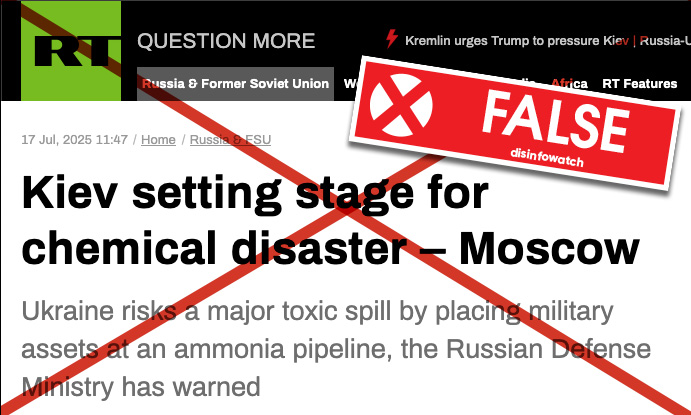
A report posted to RT claims that Ukraine is preparing to create a “chemical disaster” without presenting any credible evidence of it.
The Claims:
-
Ukraine is deliberately creating a chemical spill near the frontline
-
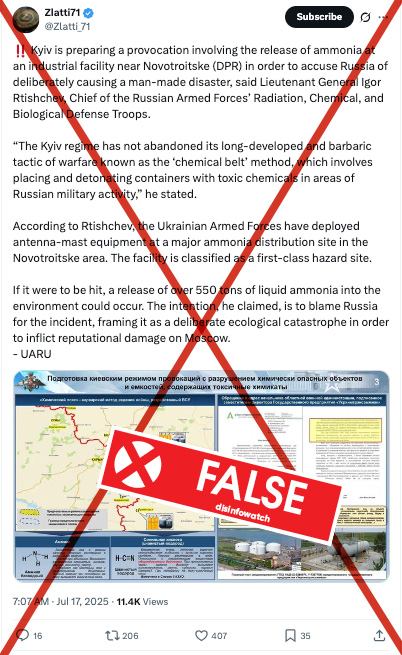
The article repeats a Kremlin claim that Kyiv is orchestrating a “major chemical disaster” near the front, intended to blame Moscow.
-
-
It’s a false-flag aimed at discrediting Russia
-
RT frames the alleged plan as a staged provocation, consistent with previous regular claims about Ukrainian “dirty bombs”, false biological weapons claims and chemical accident conspiracies. One of the most notorious of which was a hysterical 2022 claim that Ukraine was using mosquitoes to deliver biological weapons against Russian troops.
-
The Facts:
-
No credible evidence supports claims of planned chemical leaks
-
RT does not provide verifiable sources; no independent authorities (e.g., OPCW, UN, Western governments) have confirmed such a threat.
-
In contrast, the EU has warned that Russian forces are using chemical weapons in Ukraine. On July 15, 2025, Kaja Kallas stated that “Moscow is using banned chemical weapons to inflict as “much pain and suffering” as possible to force Ukraine to surrender.
-
-
Past chemical-allegation narratives are Kremlin disinfo tropes
-
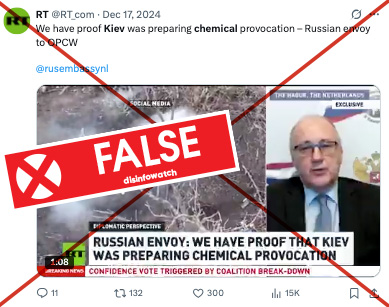
Similar unsubstantiated claims include Ukraine planning a “dirty bomb,” debunked as fear‑mongering aimed at undermining Kyiv’s credibility.
-
Narrative Context & Strategic Purpose:
-
Shifting blame and obfuscating Russian culpability
-
By accusing Ukraine of planning a chemical disaster, RT inverts the narrative, directing scrutiny away from credible reports of Russian chemical weapon usage.
-
-
Undermining Western support for Kyiv
-
Suggesting Ukraine poses a chemical threat to its own people encourages alarmism, pressuring Western governments and publics to reconsider their backing.
-
-
Reinforcing the “Kyiv as aggressor” framing
-
This fits a larger Kremlin information pattern that presents Ukraine not as a victim but as a provoker—posing moral equivalence and justifying Russian intervention.
-
RT’s reporting is a continuation of Kremlin disinformation patterns: unverified and unsubstantiated, designed to generate fear, deflect accountability from Russia, and erode Western trust in Ukraine. Readers should treat such claims with deep skepticism and cross-check against independent monitoring bodies like the OPCW, EU sanctions lists, and credible NGOs reporting from the field.